

This blog breaks down a 10-point checklist for getting a commercial kitchen ready for the busiest six weeks of the year, from Thanksgiving through New Year’s. It covers what to inspect and service on ovens, fryers, refrigeration, ice machines, dishwashers, hoods and more, and explains why October is the best time to book planned maintenance, before emergency calls spike and every kitchen in the area is competing for a technician. Malachy Parts & Service walks through what to check yourself, what belongs with a certified technician, and how scheduling now catches small problems while they’re still cheap. The takeaway: service your equipment before the rush, not during it.
The busiest six weeks of the year start sooner than you think.
Thanksgiving through New Year's is when commercial kitchens earn their year. Catering orders stack up, holiday parties fill the dining room, and every station runs hot from open to close. It's also when equipment fails most often, because it's working its hardest.
Here's the catch: emergency service calls spike at the same time. When a fryer goes down the Saturday before Thanksgiving, you're competing with every other kitchen in the area for a technician.
The fix is simple. Service your equipment in October, while schedules are open and small problems are still cheap. Use this 10-point checklist to get your kitchen holiday-ready.
The 10-Point Checklist
- Calibrate your ovens
- Test fryer thermostats & high-limit controls
- Check ranges, griddles & charbroilers
- Inspect refrigeration door gaskets
- Service walk-ins & reach-in coolers
- Deep-clean & sanitize ice machines
- Verify dishwasher temperatures
- Clean & inspect hoods & exhaust systems
- Prep beverage, frozen & soft serve equipment
- Check holding, warming & steam equipment
Diners & takeout orders
Americans who made a restaurant part of their Thanksgiving, dining in or taking out
Bar sales spike
Jump in beer sales reported the night before Thanksgiving — one of the busiest bar nights of the year
Dirtier than toilet water
Share of fast-food ice samples found dirtier than bathroom water in one widely reported study
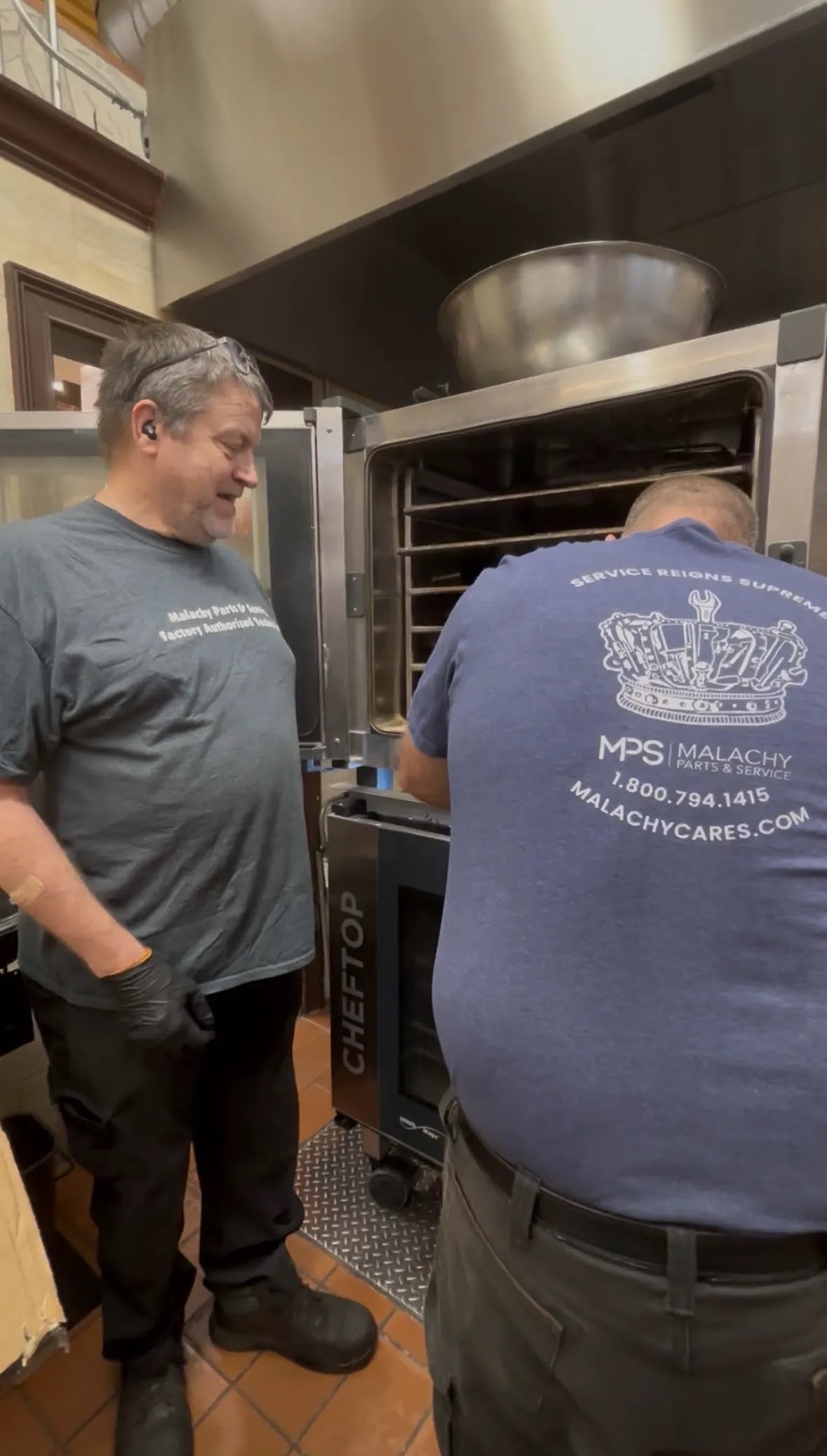
1. Calibrate Your Ovens
An oven that runs 25°F off won't announce itself. It just quietly produces dry turkey, pale crusts, and longer ticket times. Check thermostat accuracy against an independent oven thermometer, and look for uneven heat from side to side.
While you're at it, inspect door gaskets and hinges, clean convection fans, and listen for blower motors that sound rough. For conveyor and deck pizza ovens, check belt tension, burner flames, and deck stones for cracks.
Fun fact: The microwave oven was discovered by accident. In the 1940s, Raytheon engineer Percy Spencer noticed a candy bar melting in his pocket while he worked near a radar magnetron.
2. Test Fryer Thermostats & High-Limit Controls
Fryers work overtime in the fall, from comfort food menus to holiday appetizers. A thermostat that drifts even a little causes greasy food, faster oil breakdown, and higher oil costs.
Have a technician verify the operating thermostat and the high-limit safety control, which shuts the fryer off before oil overheats. Check gas burners or heating elements, drain valves, and filtration pumps. Then do a full boil-out to clear the carbon buildup that insulates elements and wastes energy.
Fun fact: Thomas Jefferson is often credited with bringing French fries to the American table. He served "potatoes in the French manner" at a White House dinner in the early 1800s.
3. Check Ranges, Griddles & Charbroilers
These workhorses get ignored until a burner won't light. Clean and inspect burner ports, verify pilot lights and igniters, and check gas valves and connections for leaks. On griddles, confirm the surface heats evenly from edge to edge, since cold spots slow down a busy line fast.
4. Inspect Refrigeration Door Gaskets
A torn or flattened gasket is one of the cheapest parts in your kitchen, and one of the most expensive to ignore. Every gap lets cold air out, forcing the compressor to run longer and raising your utility bill.
Try the dollar-bill test: close the door on a bill and pull. If it slides out easily, the seal is weak. Look for cracks, tears, mold, and hardened rubber, especially at the corners.
Fun fact: Research on refrigerator design has found that close to 30% of a unit's heat loss can happen through the door gasket. In commercial settings, gaskets typically wear out every three to five years.
5. Service Walk-Ins & Reach-In Coolers
Holiday inventory means fuller coolers and more door openings, both of which strain refrigeration. Before the rush, clean condenser coils (dirty coils are a top cause of compressor failure), check evaporator fans, and confirm defrost cycles are working.
Verify that every unit holds food at 41°F or below, the FDA Food Code standard for cold holding. Check walk-in door closers, strip curtains, and floor drains too.
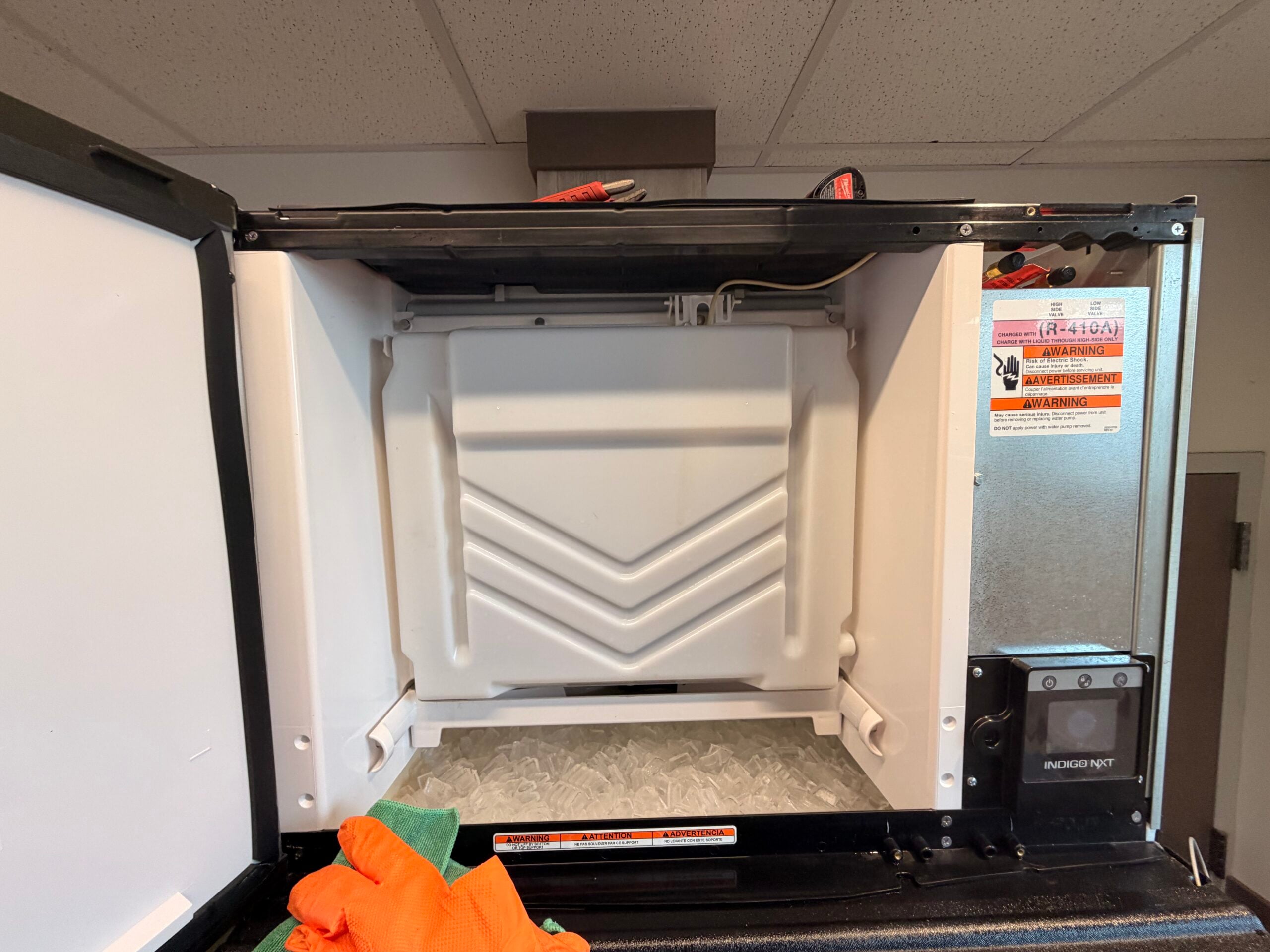
6. Deep-Clean & Sanitize Ice Machines
Ice is food, and health inspectors treat it that way. Scale and slime build up inside the evaporator and bin, where nobody looks until the ice tastes off or production drops.
Schedule a full descale and sanitize, replace water filters, clean the condenser, and check the bin and drain. This is also the moment to get ahead of holiday bar volume.
Fun fact: In 2006, a 12-year-old Florida student made national news with a science fair project. She found that ice from fast food restaurants contained more bacteria than their toilet water 70% of the time. The likely culprit: ice machines that rarely got cleaned.
Bonus fun fact: The night before Thanksgiving is famous as one of the busiest bar nights of the year. One restaurant platform reported beer sales jumping close to 300% that night. Make sure your ice machine is ready.
7. Verify Dishwasher Temperatures
A dish machine that doesn't hit its temperatures isn't sanitizing, and that's a health code problem. Under the FDA Food Code, most high-temperature machines need a final sanitizing rinse of at least 180°F. Check wash and rinse temperatures on every cycle type.
Inspect the booster heater, spray arms, wash and rinse jets, and curtains. For low-temp machines, confirm chemical sanitizer levels with test strips. Descale if you see mineral buildup, because scale is an insulator that makes heaters work harder.
8. Clean & Inspect Hoods & Exhaust Systems
Holiday volume means more grease in the air and in your ductwork. Grease buildup is a major cause of restaurant kitchen fires.
The NFPA 96 fire code sets inspection frequency based on cooking volume: quarterly for high-volume operations like charbroiling or 24-hour kitchens, and semiannually for moderate volume. If you're due, book it now. Also check that filters are in place, fans are running at full speed, and the fire suppression system is current.
9. Prep Beverage, Frozen & Soft Serve Equipment
Hot cider, cocoa, and specialty drinks fill fall menus. Check coffee brewers and hot water dispensers for scale, clean beverage lines, and confirm that refrigerated dispensers hold temperature.
If you run soft serve or frozen beverage machines, decide now whether they're staying in service or shutting down for winter. Either way, they need attention. A machine that sits dirty for months is a spring repair waiting to happen. Malachy is the Northeast master parts distributor and service partner for Pasmo soft serve and frozen beverage machines.
Fun fact: According to a popular legend, soft serve was born in 1934 when Tom Carvel's ice cream truck got a flat tire. His ice cream started melting, and customers loved the soft texture.
10. Check Holding, Warming & Steam Equipment
Buffets, banquets, and catering all lean on hot holding. Verify that holding cabinets, steam tables, and food warmers keep food at 135°F or above, as the Food Code requires. Check heating elements, thermostats, and water levels in steam wells.
For steamers and combi ovens, descale the boiler or generator and test the water filtration. Scale is one of the most common reasons steam equipment fails.
Book Your Planned Maintenance Before the Rush
You could work through this list yourself, but some items, like gas controls, high-limit safeties, and refrigeration systems, belong with a certified technician. That's where we come in.
Malachy Parts & Service is a family-owned company with more than 30 years of experience keeping commercial kitchens running across New Jersey and New York City. Our CFESA-certified technicians are factory-trained and fully insured, and we stock genuine OEM parts so repairs get done right the first time.
October is the sweet spot. Our schedule still has room, parts lead times are manageable, and any issues we find can be fixed before they become emergencies. Once Thanksgiving week arrives, every kitchen in the area is calling at once.