

This audio recap emphasizes the importance of proactive equipment care for restaurants preparing for upcoming health inspections in the tri-state area. While many managers focus on surface cleanliness, Malachy Parts & Service argues that proactive maintenance is the true key to avoiding regulatory violations and expensive breakdowns.
Specifically, the blog highlights how clogged condenser coils can restrict airflow, leading to inconsistent temperatures, higher utility bills, and potential food safety hazards. To mitigate these risks, the source advocates for preventative maintenance as a strategic way to protect inventory and ensure operational efficiency.
By addressing hidden issues like ice machine sanitation and refrigeration stability, business owners can transition from reactive repairs to long-term reliability. Ultimately, the guide serves as a reminder that functional equipment is just as vital to a passing grade as a sanitized kitchen.
Health inspections don’t just flag what’s on your prep table—they catch what’s happening behind the scenes. And more often than not, the issues that lead to violations or costly breakdowns aren’t obvious until it’s too late.
As inspection season approaches across New Jersey, New York City, and Philadelphia, now is the time to look beyond the surface.
What You Don’t See Is What Fails You
Most operators stay on top of the visible:
- Clean kitchens
- Proper food storage
- Sanitized surfaces
But the real risks build quietly inside your equipment.
A refrigeration unit that looks perfectly fine on the outside could be struggling internally—working harder, running hotter, and slowly falling out of compliance.
What Dirty Condenser Coils Are Costing You
Condenser coils are one of the most overlooked—and most critical—components in your equipment.
When they’re clogged with grease, dust, and debris, here’s what happens:
- Restricted airflow → your system can’t breathe
- Higher internal temperatures → your unit works overtime
- Inconsistent cooling → puts food safety at risk
- Increased energy bills → higher operating costs
- Shortened equipment lifespan → premature failures
What starts as a dirty coil can quickly turn into spoiled inventory, emergency service calls, or worse—a failed inspection.
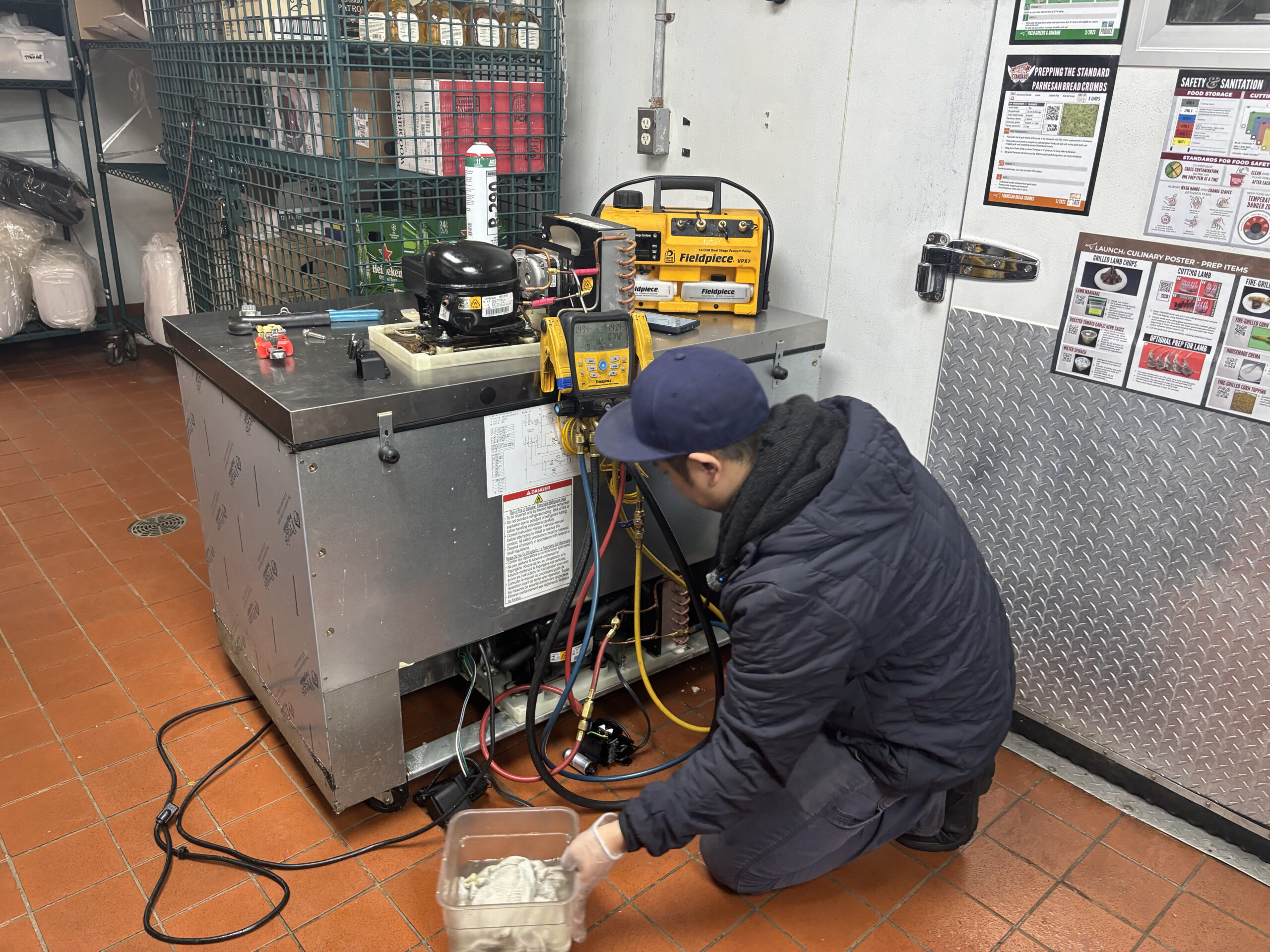
What Our Technicians See Every Day
In the field, these issues are rarely surprises—they’re patterns.
Our technicians regularly walk into kitchens where equipment hasn’t been maintained, and the same problems show up again and again.
As one of our techs puts it:
“If your unit can’t breathe, it can’t cool.”
And that’s exactly what happens when condenser coils are neglected. Airflow is restricted, heat builds up, and your system starts fighting a losing battle.
Another common reality:
“Most breakdowns we see were preventable.”
Preventative maintenance isn’t about over-servicing—it’s about catching small issues before they become expensive ones.
What We Mean by “Dirty Coils”
This isn’t just a light layer of dust.
In busy kitchens, condenser coils can quickly become packed with:
- Grease from cooking environments
- Dust and debris from daily operations
- Airborne particles that cling and build over time
Before cleaning:
Airflow is restricted, systems overheat, and performance drops.
After cleaning:
Air moves freely, cooling stabilizes, and your equipment runs efficiently again.
It’s one of the simplest fixes with one of the biggest impacts.
It’s Not Just About Coils
While condenser coils are a major factor, they’re part of a bigger picture when it comes to inspection readiness.
Other common problem areas include:
- Ice machine cleanliness
- Refrigeration temperature consistency
- Proper airflow and ventilation
Each of these plays a role in keeping your kitchen compliant, efficient, and safe.
Preventative Maintenance = Risk Management
Preventative maintenance isn’t an extra—it’s protection.
It helps you:
- Avoid emergency breakdowns during peak service
- Protect your inventory from temperature fluctuations
- Reduce energy waste and operating costs
- Stay ahead of health inspections with confidence
Instead of reacting to problems, you’re preventing them entirely.
Get Ahead of Inspection Season
Health inspections don’t give warnings—but you can.
A simple maintenance check today can prevent thousands in repairs, lost product, and downtime tomorrow.
Get ahead of inspection season. Schedule your preventative maintenance and make sure your equipment is ready when it matters most.